

In New York, businesses, from restaurants in Manhattan to e-commerce stores across the state, rely on seamless and secure payment processing to handle millions of transactions daily. Whether accepting credit cards, mobile wallets, or online payments, having a reliable payment processor is essential for maintaining smooth operations and enhancing the customer experience.
However, selecting the right payment processor can be challenging. Providers offer varying pricing models, technologies, and POS systems and POS terminals, making it crucial for merchants to understand their options.
This guide compares 10 top credit card processors serving New York businesses, helping you evaluate the factors that matter most when choosing a payment provider.
What Is a Credit Card Processing Company?
A credit card processing company enables businesses to accept payments made with credit cards, debit cards, mobile wallets, and digital payment platforms.
When a customer pays with a card, several steps occur in seconds:
- The payment terminal or website captures card information.
- The transaction is sent to the payment processor.
- The processor communicates with the card network.
- The issuing bank approves or declines the transaction.
- Funds are transferred to the merchant account.
This entire process usually takes 2–5 seconds but involves multiple financial institutions working together.
Payment processors also provide tools such as:
- POS systems
- POS terminals
- Payment gateways
- Mobile payment solutions
- Fraud detection tools
- Chargeback management
- Reporting dashboards
These tools allow businesses to manage transactions across multiple payment channels.
Why Businesses Need Reliable Payment Processing
New York has one of the largest business ecosystems in the United States. Companies operate across industries such as:
- Restaurants and hospitality
- Retail stores
- Healthcare services
- Professional services
- Ecommerce brands
- Subscription-based businesses
Because customers expect fast, secure, and flexible payment options, businesses need payment systems that support:
- Contactless payments
- Mobile wallets
- Online checkout
- In-store POS transactions
- Recurring billing
- International payments
Processors that offer omnichannel payment capabilities help businesses deliver a better customer experience while simplifying payment management.
What To Look for in a Credit Card Processor
Before selecting a payment processor, businesses should evaluate several key factors.
Pricing Model
Most credit card processors use one of the following pricing structures.
Interchange Plus Pricing
Interchange-plus pricing separates the card network fee from the processor markup.
Example structure:
Interchange fee + processor markup
This model is often preferred by growing businesses and high-volume merchants because pricing transparency allows them to track real processing costs.
Flat Rate Pricing
Flat-rate pricing applies the same rate to every transaction.
Example:
2.6% + $0.10 per transaction
Flat-rate models are common among small businesses because they simplify payment calculations.
How Credit Card Processing Works
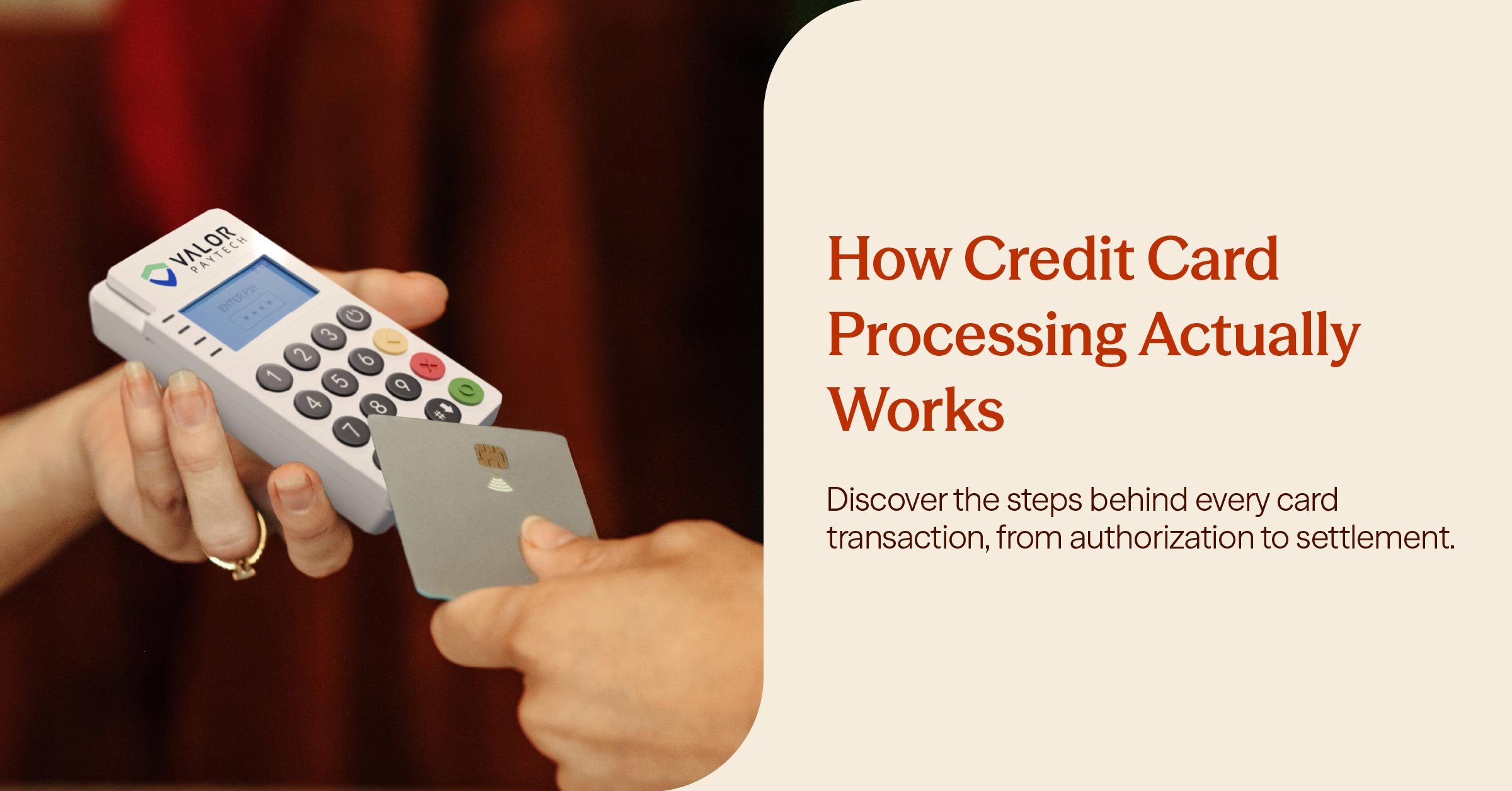
Credit card processing allows businesses to accept electronic payments through debit cards, credit cards, and digital wallets. When a customer makes a payment, several systems work together to approve and settle the transaction.
A typical credit card transaction involves:
- The customer’s card network (Visa, Mastercard, etc.)
- The issuing bank that provided the card
- The payment processor
- The merchant account provider
- The business POS system or payment gateway
When a customer taps, dips, or enters card details, the processor sends the transaction for authorization. Once approved, the funds are transferred to the merchant’s account during settlement.
Reliable processors ensure transactions are secure, fast, and compliant with payment industry standards.
Best Credit Card Processing Companies Serving New York Businesses:
1. MBNCARD, Inc.
MBNCARD is a merchant services provider that has served businesses throughout New York for many years.
- Core services: Merchant accounts, payment processing, and payment hardware
- Best for: Small and midsize businesses seeking traditional merchant service providers
- Standout feature: Long-standing experience in the merchant services industry
2. Suede
Suede is a credit card processing and payment solutions company based in New York that supports merchants, ISOs, and ISVs across multiple industries.
- Core services: In-person payment processing, ecommerce payments, POS systems, POS terminals, and payment gateway solutions
- Best for: Merchants, ISOs, and ISVs seeking flexible payment infrastructure across online and in-person channels
- Standout feature: A connected payment ecosystem designed to support multiple payment channels
3. American Express Merchant Services
American Express operates both as a credit card network and a merchant acquiring service.
- Core services: Card acceptance, payment processing, fraud protection tools, and merchant management services
- Best for: Hospitality and retail businesses serving a large American Express customer base
- Standout feature: Global cardholder network and strong brand recognition
4. Square
Square is widely used by small businesses because of its easy setup and simple pricing model.
- Core services: POS systems, mobile card readers, ecommerce tools, and payment processing
- Best for: Small retailers, pop-up stores, and service businesses
- Standout feature: Flat-rate pricing and quick onboarding
5. Shopify Payments
Shopify Payments is designed for merchants running ecommerce stores using the Shopify platform.
- Core services: Online payment processing, ecommerce checkout integration, and POS compatibility
- Best for: Ecommerce retailers and hybrid online-and-store businesses
- Standout feature: Seamless integration with the Shopify ecommerce platform
6. Helcim
Helcim focuses on transparent pricing and flexible payment tools for growing businesses.
- Core services: Card-present payments, online payments, invoicing, and subscription billing
- Best for: Small and midsize businesses seeking interchange-plus pricing transparency
- Standout feature: Clear pricing structure and detailed reporting tools
7. Stripe
Stripe is widely used by online businesses and technology platforms that require customizable payment solutions.
- Core services: Online payment processing, payment APIs, subscription billing, and international payment support
- Best for: SaaS companies, ecommerce businesses, and technology platforms
- Standout feature: Developer-friendly payment infrastructure
8. Fiserv (Clover Platform)
Fiserv provides merchant services through the Clover POS platform.
- Core services: POS systems, payment processing, inventory management, and analytics tools
- Best for: Restaurants and retail businesses that require integrated POS systems
- Standout feature: App-based POS ecosystem designed for business operations
9. PaymentCloud
Payment Cloud specializes in merchant accounts for businesses operating in higher-risk industries.
- Core services: Payment processing, merchant accounts, and chargeback management
- Best for: Businesses requiring specialized underwriting due to industry risk levels
- Standout feature: Expertise in high-risk merchant approvals
10. PayPal Merchant Services
PayPal offers widely recognized payment tools used by businesses across the world.
- Core services: Online checkout solutions, digital wallets, mobile payments, and POS hardware
- Best for: Ecommerce businesses and merchants selling internationally
- Standout feature: Global consumer recognition and a large user base
Side-by-Side Comparison of Credit Card Processors
| Company | Best For | Pricing Style | Contract | In-Person / Online | Support Type |
|---|---|---|---|---|---|
| MBNCARD | Local businesses | Interchange-plus | Varies | Both | Merchant services |
| Suede | Merchants, ISOs, ISVs | Custom / interchange-plus | Varies | Both | Merchant support |
| American Express | Hospitality & retail | Network pricing | Varies | Both | Global support |
| Square | Small businesses | Flat-rate | Month-to-month | Both | Online & phone |
| Shopify Payments | Ecommerce merchants | Platform pricing | Month-to-month | Both | Online support |
| Helcim | Growing SMBs | Interchange-plus | Month-to-month | Both | Merchant support |
| Stripe | Online platforms | Usage-based | No long-term contract | Online | Developer support |
| Fiserv / Clover | Restaurants & retail | Varies | Contract-based | Both | Merchant support |
| Payment Cloud | High-risk industries | Custom pricing | Varies | Both | Dedicated specialists |
| PayPal | Ecommerce & global sales | Flat-rate | Month-to-month | Both | Online support |
Types of Credit Card Processing Solutions
Businesses in New York use several types of payment processing tools depending on how they operate.
POS Terminals
POS terminals allow businesses to accept payments in person. Customers can pay using chip cards, contactless cards, or mobile wallets.
These devices are commonly used in:
- Restaurants
- Retail stores
- Coffee shops
- Grocery stores
POS Systems
A POS system combines payment processing with business management tools such as:
- Inventory tracking
- Sales reporting
- Employee management
- Customer analytics
Restaurants and retail stores often rely on POS systems for daily operations.
Online Payment Gateways
Ecommerce businesses use payment gateways to accept payments through websites or online checkout pages.
Payment gateways allow businesses to:
- Process online credit card payments
- Accept digital wallets
- Manage subscription billing
- Handle recurring payments
Mobile Payment Processing
Mobile payment solutions allow businesses to accept payments using smartphones or tablets.
This is popular among:
- Service professionals
- Delivery businesses
- Pop-up shops
- Event vendors
Credit Card Processing Fees Explained
One of the most common questions businesses ask is how much credit card processing costs.
Processing fees usually include several components.
Interchange Fees
Interchange fees are paid to the issuing bank and card network. These fees vary depending on:
- Card type
- Transaction method
- Business category
Processor Markup
Payment processors add a markup above the interchange fee for providing merchant services.
This is how processors generate revenue.
Additional Fees
Businesses may also encounter:
- Monthly account fees
- PCI compliance fees
- Chargeback fees
- Equipment costs
Understanding these fees helps businesses calculate the true cost of accepting payments.
Credit Card Processing for Small Businesses in New York
Small businesses often look for payment processors that provide:
- Simple pricing
- Quick setup
- Easy POS systems
- Reliable customer support
Common industries include:
- Restaurants
- Retail shops
- Beauty salons
- Coffee shops
- Service providers
Flat-rate pricing models are popular among smaller businesses because they simplify cost calculations.
Average Credit Card Processing Fees in New York
Credit card processing fees vary depending on several factors.
Typical ranges include:
| Card Type | Average Fee |
|---|---|
| Debit Cards | 1% – 2% |
| Credit Cards | 1.5% – 3% |
| Premium Rewards Cards | 2% – 3.5% |
Fees depend on:
- Card type
- Payment method
- Transaction size
- Merchant industry
- Risk level
Businesses processing high transaction volumes may qualify for lower interchange-plus pricing.
Conclusion
Choosing the right credit card processor can make a big difference in how smoothly your business handles payments. The provider you choose affects transaction costs, payment reliability, and how easily you can accept payments in-store and online.
Because New York businesses operate in a competitive market, it’s important to compare pricing, payment tools, and contract terms before planning.
Start by reviewing your current processing fees, identifying the features your business needs, and comparing a few providers. A careful comparison can help you find a payment solution that supports your business now and as it grows.
1. What are the best credit card processing companies in New York?
The best credit card processing companies in New York depend on your business needs. Businesses usually compare pricing, POS systems, online payment options, and customer support.
2. How much do credit card processing fees cost in New York?
Credit card processing fees usually range from 1.5% to 3.5% per transaction. The exact cost depends on the pricing model, card type, and payment method.
3. What should businesses look for in a credit card processor?
Businesses should look at transaction fees, pricing transparency, POS compatibility, payment tools, contract terms, and customer support.
4. Can businesses accept both in-store and online payments with the same processor?
Yes. Many credit card processors allow businesses to accept payments in-store, online, and on mobile devices using the same system.
5. Do small businesses need a POS system to accept credit cards?
Not always. Businesses can use POS terminals or mobile card readers to accept payments. A full POS system is useful for features like inventory tracking and reporting.
6. How do credit card processing companies make money?
They charge fees on transactions, which can include interchange fees, processor markups, monthly account fees, and additional service fees.
7. What services do credit card processing companies provide?
- POS terminals and POS systems
- Mobile payment solutions
- Online payment gateways
- Fraud monitoring and chargeback management
- Merchant accounts and funding solutions
8. Do credit card processing companies support mobile wallets?
Most modern processors allow payments via Apple Pay, Google Pay, Samsung Pay, and other contactless methods.